
Oh my gosh, if you’ve ever been paralyzed by the thought of making Korean BBQ at home, I am here to tell you to STOP IT! You don’t need a massive grill setup or ingredients you can’t pronounce. I remember the first time I tried making authentic, savory Bulgogi. I thought it would be intense, but honestly, this recipe is my weeknight hero. It’s simple, it’s fast, and it tastes exactly like ordering at your favorite Korean spot! We’re talking thinly sliced beef, a punchy marinade, and you’re done in practically no time. You are going to absolutely love how easy this is to get on the table. You can check out my even quicker version right here if you’re in a massive rush!
Why This Simple Bulgogi Recipe Works
I know you hear ‘Korean BBQ’ and think it requires an afternoon commitment, but trust me on this one: this recipe is different. We’re focusing on pure flavor without any of the fuss. When I first started making Bulgogi, I always used fancy cuts and let it marinate overnight, but that’s just not practical for a Tuesday night after work! This version proves that high-quality results don’t need complicated methods.
If you’re looking for inspiration on making amazing steak in general, you should totally read my tips on the secret to juicy bliss. But for Bulgogi specifically, here’s why this recipe is a winner, even for beginners:
- It uses basic pantry staples—nothing tricky to track down.
- The sear is incredible, even if you’re just using a regular skillet instead of a giant stovetop grill.
- It maximizes flavor in minimal time, which is everything when dinner needs to happen fast.
Quick Prep Time for Authentic Bulgogi
Seriously, the prep time is only about 15 minutes! You’re just mixing some liquids and slicing an onion. That’s it. You can probably scroll through social media for longer than it takes to throw this marinade together. Because the beef is so thinly sliced, it soaks up all that savory, slightly sweet goodness almost instantly. It’s perfect for when you realize at 5 PM that you have no idea what’s for dinner.
Flavor Development in Minimal Time
Usually, these types of marinated dishes call for an all-day soak, right? Not here! While letting it sit for 4 hours is awesome if you planned ahead, you only need 30 minutes to get that signature sweet-and-salty profile penetrating the meat. That’s because the sugar and liquids in the marinade work fast. You get that deep, rich flavor without waiting until tomorrow for dinner!

Essential Ingredients for Perfect Bulgogi
Okay, let’s talk about what goes into this incredible marinade, because that’s where 90% of the magic happens! We keep this super straightforward. You need about a pound and a half of beef, and please make sure it’s sliced paper-thin. The marinade itself starts with a base of soy sauce—about a quarter cup—for that salty kick. Then we balance it with two tablespoons of brown sugar. Don’t worry about fancy imported sweeteners; regular dark brown works beautifully here.
Next, we layer in the aromatics. I always use about a tablespoon of minced garlic—don’t skimp, please!—and a teaspoon of fresh ginger that’s been grated right on the microplane. A dash of sesame oil gives it that signature nutty aroma, and just a little bit of water helps distribute everything evenly. If you are feeling extra fancy, try swapping some of that water out for pure pear juice. Seriously, that pear juice trick is huge; it adds natural sweetness and gently helps tenderize the meat, similar to how I approach my teriyaki sauce, so it’s super tender.
Selecting the Right Cut for Bulgogi
This is where you can really affect tenderness! You absolutely must use thinly sliced meat. My favorite picks are sirloin or ribeye if you want a little more fat marbled in, which equals juicy flavor. When you slice it, point your knife against the way the muscle grains are running—this is cutting against the grain. If you can grab pre-sliced meat from your butcher or the freezer section labeled for stir-fry or Philly cheesesteaks, that saves time and guarantees that perfect thinness needed for quick cooking. It makes all the difference when you’re trying to caramelize it fast on that hot pan!
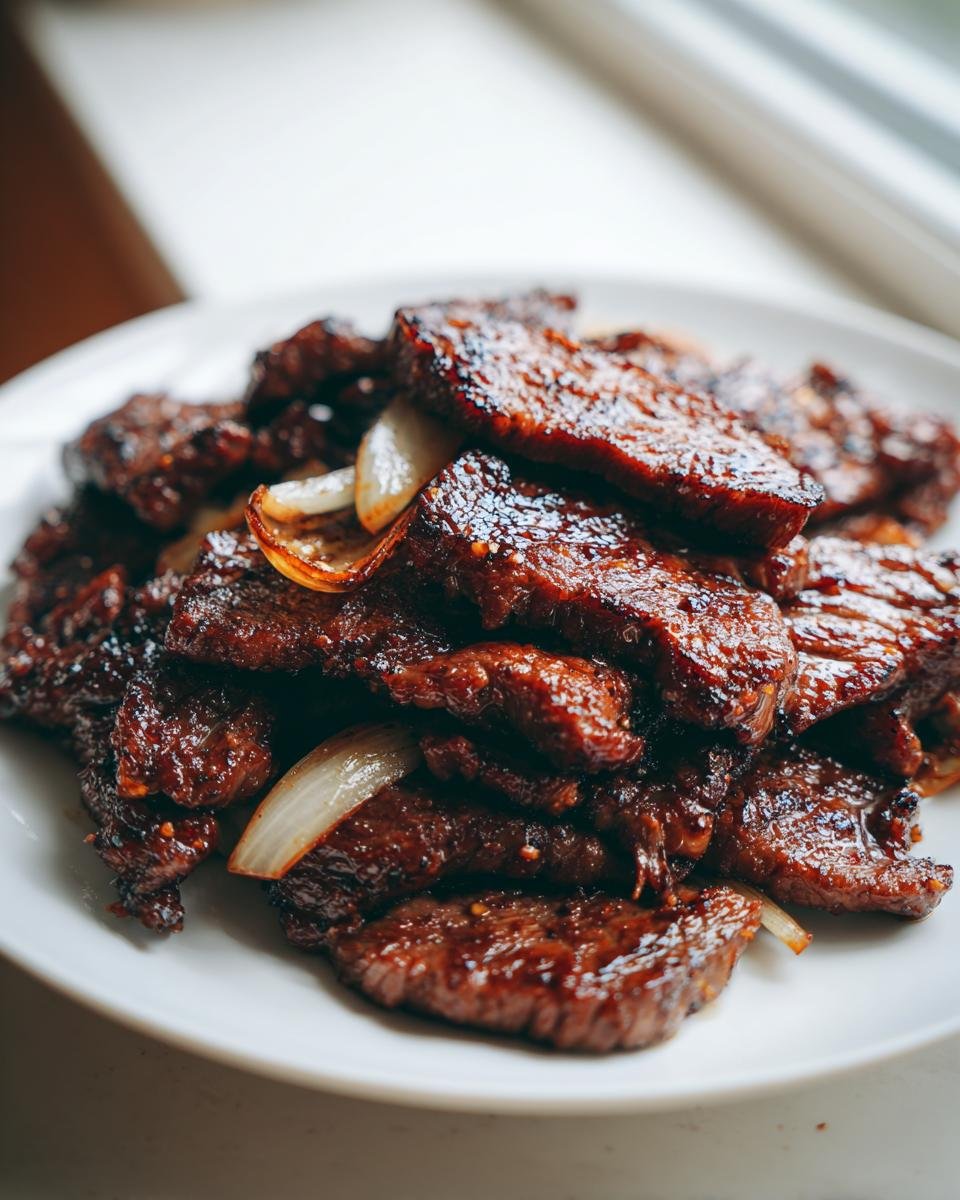
Step-by-Step Instructions for Making Bulgogi
Now that we have our beautiful, rich marinade and our thinly sliced meat, it’s time to bring this delicious Korean beef to life! This whole process moves fast once the marinating is done, so make sure you have your serving plates ready. I always try to have my rice cooked before I even start this part because once that meat hits the heat, it’s gone in a flash! If you’re making side soups or bowls, having your wonton soup ready to go now is the perfect time to multitask.
Creating the Bulgogi Marinade Base
First things first: you need that marinade to be perfectly smooth. Grab a medium bowl—nothing too fancy needed here. Whisk together your wet ingredients like soy sauce, sesame oil, and the water. Then, slowly add in all your dry bits: the brown sugar, pepper, minced garlic, and grated ginger. You have to whisk this aggressively for a minute or two! I learned the hard way that if the sugar isn’t dissolved, you end up with crunchy spots instead of sweet caramelization. Once it looks uniform, toss in your thin beef slices and the sliced onions. Make sure everything is coated—get your hands in there if you need to! Then, cover it and tuck it into the fridge for at least half an hour. Trust me, 30 minutes is the minimum, but an hour is even better.
Grilling or Pan-Frying Your Bulgogi
Time to cook! You want your pan or grill surface screaming hot. I mean medium-high heat, maybe even a little higher if you’re using a cast-iron skillet—we are looking for instant sizzle. You don’t need a ton of oil because the beef has sesame oil, but just a light brush over the pan helps prevent sticking. Now, here’s the absolute secret: DO NOT CROWD THE PAN. If you throw all the meat in at once, the temperature drops instantly, and you end up steaming the beef instead of searing it. We want that beautiful, dark brown char! Cook the beef in thin, single layers, treating it almost like you are flash-frying it, letting it cook about 2-3 minutes per side.
Once you pull the first batch off, keep it warm and immediately start the next batch with a little more heat if needed. It cooks so fast, you’ll be amazed! If you’re curious about getting amazing sear marks on thicker cuts, check out my tips on the secret to juicy bliss. When it’s all done, garnish with that green onion and get ready to eat this incredible, savory Bulgogi immediately!
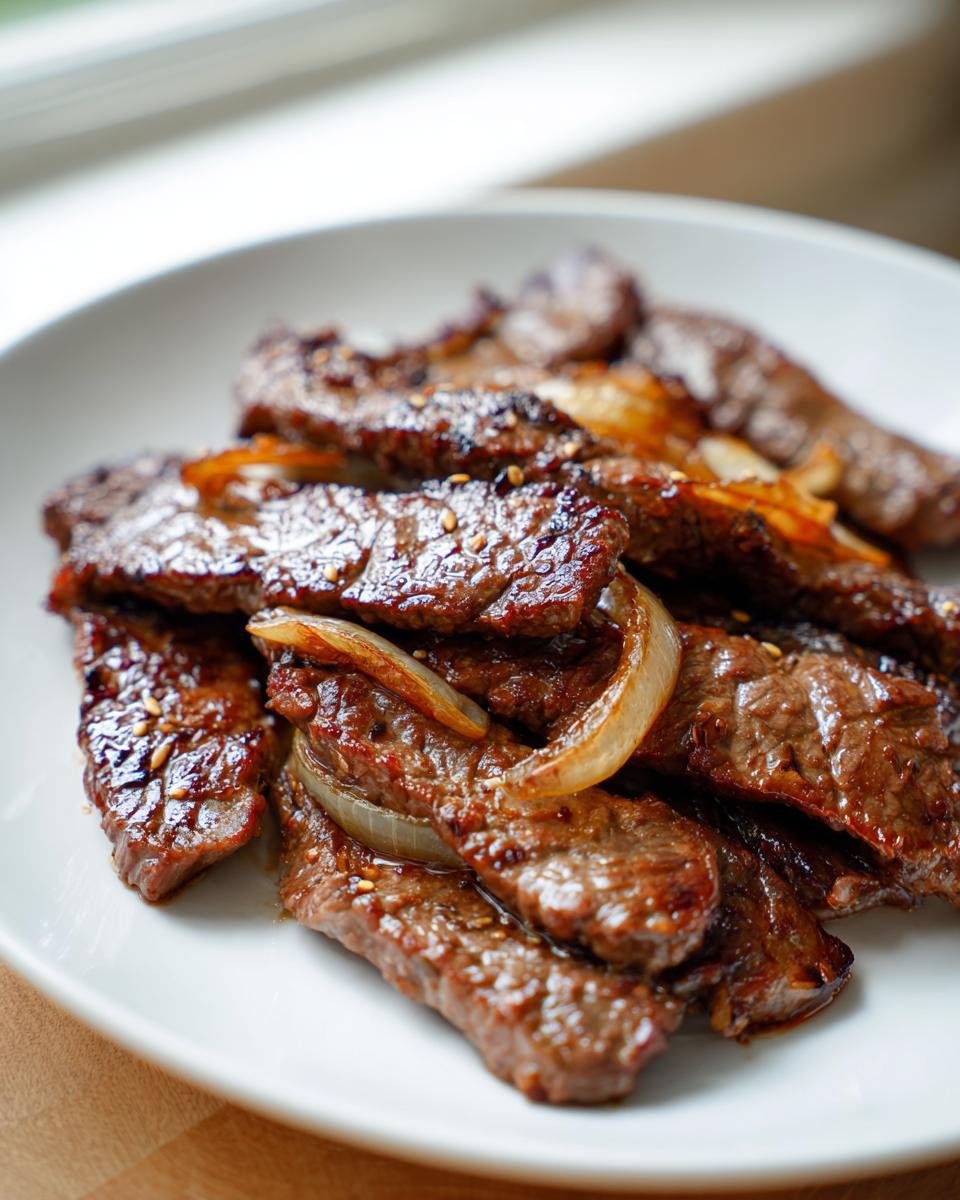
Tips for Next-Level Bulgogi Success
Okay, you’ve nailed the cooking, but I have a few little secrets that will lift this from being great homemade Bulgogi to seriously restaurant-worthy. I mentioned swapping water for pear juice earlier, but just to drive it home: fruit is your friend! If you don’t have pear juice or a ripe pear, even a tablespoon of pureed kiwi or apple mixed into the marinade works wonders because the natural enzymes break down the beef fibers. It keeps everything incredibly tender.
Another thing people sometimes forget is the onion. Don’t just toss the sliced onion into the marinade and forget it! Those onions actually caramelize beautifully on the hot pan right alongside the beef. I usually fish them out of the marinade bowl and cook them separately for just a minute before adding the meat, or I just let them cook right on top of the beef in the pan. They get sweet and smoky!
Also, if you have any leftover marinade sitting in the bowl after you pull the meat out—don’t toss it! If you simmer that leftover marinade in a tiny saucepan until it thickens up and boils away any raw meat concerns, you get a fantastic, intensely flavored sauce drizzle. It’s like getting a free bonus sauce for your rice bowl. If you’re interested in other great sauce hacks, check out my homemade ketchup recipe; sometimes adding a tiny, tiny bit of tomato sweetness balances the soy wonderfully, too!
Serving Suggestions for Your Bulgogi
Now that you have this amazing, flavorful Bulgogi, how do you eat it? Honestly, I usually just eat it straight off the cooling rack standing over the stove, but that’s not very polite for company! Traditionally, you want something very clean alongside it to cut through the savory marinade. Steamed white rice is a must—it soaks up all those lovely juices that drip off the meat.
My favorite way to serve it, though, is Korean style: lettuce wraps. Grab some crisp red leaf lettuce, pile on the beef, maybe add a little dollop of salty, fermented kimchi, and wrap it up tight. It’s fresh and satisfying! If you’re making a bigger meal, pairing it with something slightly sweet, like my recipe for candied carrots, gives a wonderful balance to the salty beef. Enjoy every bite!
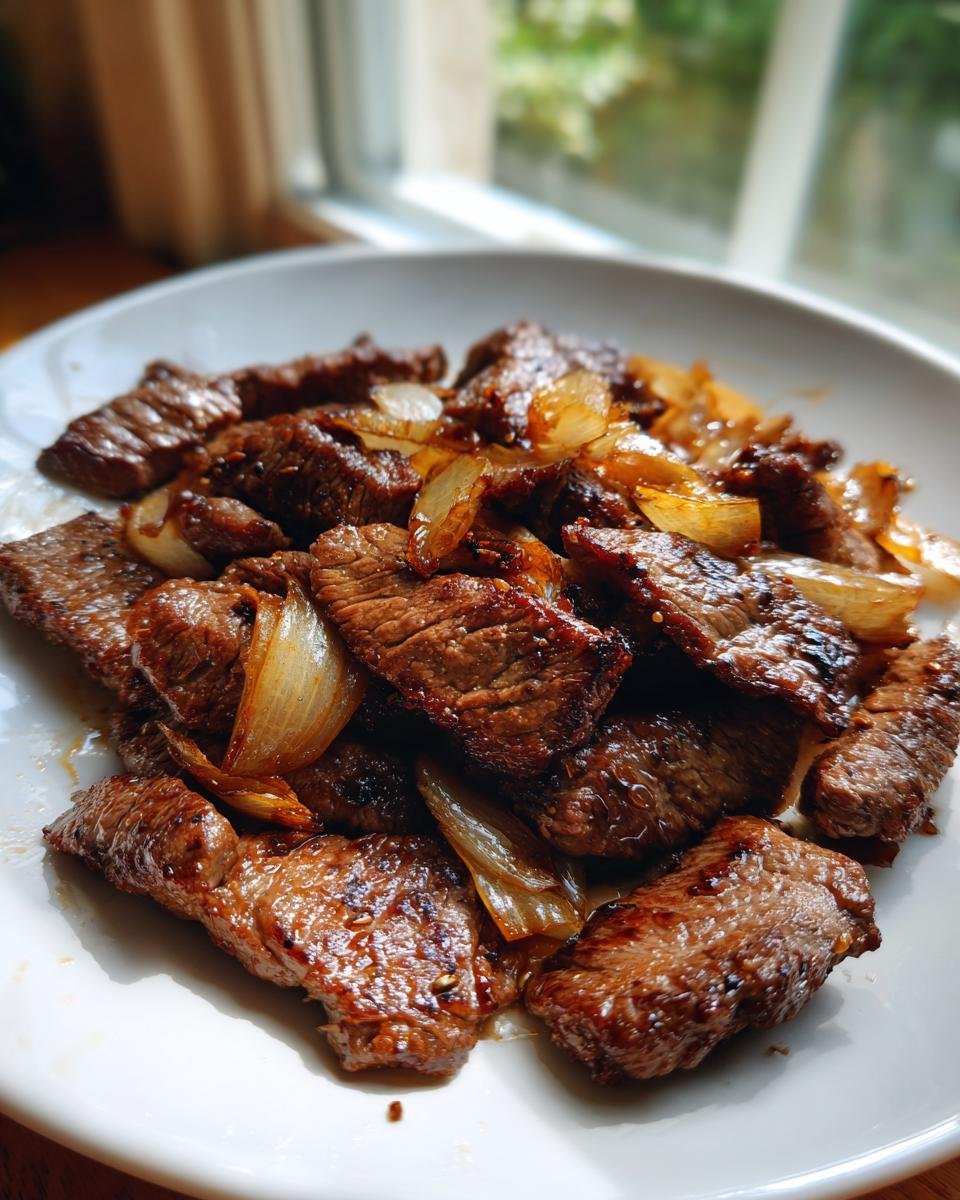
Storing and Reheating Leftover Bulgogi
You made so much Bulgogi, or maybe you were smart enough to only cook half your batch? Fantastic! Saving leftovers is easy, but you have to treat that marinade residue gently so the meat doesn’t get tough when you warm it up later. First things first: always let the cooked beef cool down completely before you try to store it. Stuffing hot meat into a sealed container creates steam, and steam ruins that lovely caramelized texture we worked so hard to achieve.
Store your cooled meat in the shallowest airtight container you own. This minimizes air exposure, which keeps it tasting fresher longer. Since we didn’t use a ton of extra liquid in the final cooking—we want that sear, remember?—it won’t be sitting in a pool of sauce, which is good because that sauce can make the beef rubbery if it sits too long.
Keeping it Right in the Fridge
I find that this leftover Bulgogi lasts beautifully for about three to four days in the refrigerator. Any longer than that, and the soy sauce starts to really change the texture of the edges. It’s dense and flavorful the next day, which makes for an amazing lunch.
Reheating Without Ruining the Sear
This is crucial! You cannot microwave this on high heat—it will turn your beautiful tender beef into jerky very quickly. The best method, hands down, is the skillet reheat. Get a non-stick pan scorching hot over medium-high heat, just like you did when cooking it fresh. Add just a tiny splash of water or broth—not oil!—to create a little steam barrier, lay the beef in a single layer if you can, and toss it quickly for maybe 60 to 90 seconds total. You just want to wake it up, not cook it again.
If you’re feeling like you need a full meal again, I love adding the reheated beef right into a fresh stir-fry of vegetables. Toss it in at the very end with some of my best green beans for a completely new dinner that uses up the leftovers perfectly! Quick reheating equals happy leftovers!
Frequently Asked Questions About Bulgogi
When you start making something new like Bulgogi, you always end up with a few burning questions! I put together the ones I get asked the most—and the ones I definitely asked myself when I first started working with Korean marinades. It’s all about getting those perfect results consistently, right?
Can I use pork instead of beef for this marinade?
Yes, you absolutely can! Pork shoulder, thinly sliced, is a fantastic substitute, often called *Dwaeji Bulgogi* if it has a spicy kick, but this simple soy-based marinade works wonderfully with pork, too. Just be careful not to overcook it since pork can dry out if you’re not watching it closely. It cooks even faster than beef sometimes!
How long must I marinate the Bulgogi for the best flavor?
Honestly, for this simple recipe, 30 minutes is the absolute minimum you should aim for to get the marinade flavor into the meat. But if you want that truly deep, robust flavor that screams authentic, give it at least two hours. I never recommend going past four hours in the fridge if you are using beef and fresh onion slices, as the acid can start to break down the texture too much. If you’re making marinated beef ahead of time, stick to that 2-4 hour window!
Can I freeze marinated Bulgogi?
This is a great way to meal prep! You can absolutely freeze the raw, marinated beef. Just make sure you spread it out in a freezer-safe bag or container—don’t let it freeze in one giant clump. When you thaw it overnight in the fridge, it actually tastes even better because the flavors continue to meld as it thaws. If you are using an air fryer for sides while you cook, check out my tips for air fryer baked potatoes so you have a fluffy side ready to go!
Is soy sauce or sugar the most important part of the marinade?
That’s like asking which is more important, baking soda or flour! Both are essential components that balance each other out. The soy sauce brings the deep umami saltiness, and the sugar (whether it’s brown sugar or pear juice) is key for caramelization when it hits the hot pan. Without enough sugar, you get salty, tough beef; without the soy, it’s just sweet meat. They work together to make amazing Korean beef!
Estimated Nutritional Snapshot for Bulgogi
Now, I always tell everyone that since we are cooking at home, our numbers can change wildly based on how much marinade we use, how much fat renders off the beef, or if you decide to use a fattier cut than I recommend. But, for simplicity, I wanted to give you an idea of what you’re looking at here based on the recipe quantities. Please treat this as a rough guide, not gospel—especially if you’re counting every single macro!
This is a fantastic protein-packed meal, which is why I love it for busy nights. Since we’re using a lean marinade base and focusing heavily on the meat, the protein content is satisfyingly high. If you’re watching your sweet intake, remember that the sugars come mostly from the brown sugar in the marinade, so be mindful of that, especially if you choose to eat big bowls of rice alongside it!
Here’s a quick look at the breakdown per serving, which we estimate for 4 people:
- Calories: Around 350 per serving. Not bad for such a flavorful main dish!
- Protein: Super high here, clocking in near 45 grams. Talk about a great way to refuel!
- Fat: Roughly 15 grams total. A lot of that depends on your beef cut, of course.
- Carbohydrates: Right around 10 grams (note: this doesn’t include any carbs from serving rice or side dishes).
If you’re interested in how fruit sugars compare to added refined sugars, I wrote a little post on the surprising sugar content of fruits that might shed some light on why I push that pear juice substitution so hard!
Share Your Bulgogi Experience
Alright, my friend, you’ve marinated it, you’ve seared it to perfection, and you probably ate most of it standing over the stove like I always do! Now it’s your turn to make a mark on this recipe. I pour my heart into these simple dishes because I want them to work for you just as well as they work for me. So please, after you’ve had your first bite of that sweet and savory Bulgogi, come back and tell me how it went!
Did you use ribeye or sirloin? Did you try the pear juice swap, or maybe sneak in a tiny bit of kiwi for ultimate tenderness? Your feedback helps me and everyone else who tries this recipe out. Ratings are huge for me—just tap those stars at the top if you loved that quick 30-minute marinade!
If you managed to capture a photo of your perfectly charred beef, I would be thrilled to see it! You can always reach out to me directly via my contact page if you have any questions about tweaking the spices next time or if you just want to share your delicious dinner photo. I can’t wait to hear all about your amazing Korean BBQ night!
Print
Simple Beef Bulgogi
- Total Time: 25 min
- Yield: 4 servings 1x
- Diet: Low Fat
Description
A straightforward recipe for Korean marinated grilled beef.
Ingredients
- 1.5 lb thinly sliced beef (sirloin or ribeye)
- 1/4 cup soy sauce
- 2 tablespoons brown sugar
- 1 tablespoon sesame oil
- 1 tablespoon minced garlic
- 1 teaspoon grated fresh ginger
- 1/2 small onion, thinly sliced
- 1/4 cup water
- 1/2 teaspoon black pepper
- Optional: 1 green onion, chopped for garnish
Instructions
- In a bowl, whisk together soy sauce, brown sugar, sesame oil, minced garlic, grated ginger, water, and black pepper to make the marinade.
- Add the thinly sliced beef and sliced onion to the marinade. Toss to coat the beef evenly.
- Cover the bowl and refrigerate for at least 30 minutes, or up to 4 hours for deeper flavor.
- Heat a grill or large skillet over medium-high heat. Lightly oil the surface.
- Remove the beef from the marinade, letting excess drip off. Cook the beef in a single layer without overcrowding the pan.
- Cook for 2-3 minutes per side until nicely browned and cooked through.
- Remove from heat. Garnish with chopped green onion if using. Serve immediately.
Notes
- Thinly slicing the beef against the grain helps keep it tender.
- You can substitute pear juice for some of the water in the marinade for added sweetness and tenderizing.
- Prep Time: 15 min
- Cook Time: 10 min
- Category: Main Course
- Method: Grilling or Pan-Frying
- Cuisine: Korean
Nutrition
- Serving Size: 1 serving
- Calories: 350
- Sugar: 8
- Sodium: 750
- Fat: 15
- Saturated Fat: 5
- Unsaturated Fat: 10
- Trans Fat: 0
- Carbohydrates: 10
- Fiber: 1
- Protein: 45
- Cholesterol: 90
Keywords: Bulgogi, Korean beef, marinated beef, grilled beef, soy sauce marinade