
Oh my goodness, are you ready for a weeknight victory? Sometimes you just crave that perfect, sticky, savory flavor bomb of Asian takeout, but you want it fast and you want it totally plant-based. Well, stop searching because I finally nailed the **Plant Based Sesame Chicken Noodles**! This isn’t some sad, watered-down version; this recipe is packed with caramelized tofu and a sauce so perfectly balanced—nutty, sweet, tangy—that it truly puts most delivery places to shame. I swear, I wasted maybe three tries just perfecting the maple syrup to rice vinegar ratio in that sauce. Once you see how fast this comes together, you’ll be making this on repeat!
Why You Will Love This Plant Based Sesame Chicken Noodles Recipe
Honestly, friends, this recipe checks every single box on a busy night. It’s the kind of meal that feels like a huge treat but takes less time than waiting for a delivery driver! You need this in your rotation. Seriously.

- It’s lightning fast! We’re talking under 35 minutes total, which is essential for those days when hunger strikes hard.
- The tofu comes out perfectly golden and chewy—no soft sad cubes here, trust me!
- That sauce? It hits that incredible sweet, salty, and nutty trifecta you crave from the best takeout spots.
- Completely vegan and packed with healthy veggies, so you never feel guilty about asking for seconds.
- Everything cooks right in one wok or skillet, which means cleanup is wonderfully easy. Aren’t we all sick of huge piles of dishes?
- The flavor profile is so customizable; you can easily dial up the heat or add extra crunch exactly how you like it.
Essential Ingredients for Perfect Plant Based Sesame Chicken Noodles
Okay, let’s get down to the good stuff! Getting the right components here is what separates a decent weeknight noodle dish from a showstopper. Don’t eyeball these measurements, especially for the sauce; that balance is everything! You want that deep savory note cut perfectly by the sweetness. It’s crucial that you press your tofu first; having that water out means you get amazing crispy edges later on.
For the Tofu and Noodles
The foundation of this whole creation starts right here. I always grab extra-firm tofu because it holds up best to aggressive stir-frying, but you have to press it. I mean it! I usually wrap mine in a few paper towels and put something heavy on top for at least 15 minutes while I prep everything else.
- 12 oz noodles (I love ramen for this, but spaghetti works great too!)
- 1 block (14 oz) extra-firm tofu, pressed so it’s nice and firm, then cubed small.
- 2 tablespoons soy sauce (or tamari if you need to keep it GF) for marinating the tofu.
- 1 tablespoon cornstarch to help that tofu crisp up in the pan.
- 2 tablespoons sesame oil, divided: half for the tofu, half for the veggies.
For the Sesame Sauce
This is where the magic lives. If you want a little extra kick, you could even stir in a spoonful of homemade chili garlic sauce right here—it’s amazing. This mixture gets whisked together before anything hits the heat, saving you precious seconds when the wok is screaming hot.
- 1/4 cup soy sauce (or tamari)
- 3 tablespoons rice vinegar for that bright tang.
- 2 tablespoons maple syrup—this is my favorite sweetener for sauces, it has a deeper flavor than plain sugar.
- 1 tablespoon grated fresh ginger—you can really taste the difference between this and dried powder!
- 2 cloves garlic, minced fine.
- 1 teaspoon sriracha (only if you like a little fire in your food!)
- For the thickener: 2 tablespoons of water mixed with 1 teaspoon of cornstarch, making a simple slurry.
Expert Tips for Preparing Your Plant Based Sesame Chicken Noodles
Listen, following a recipe is great, but knowing the *why* behind the steps is what takes you from pretty good noodles to absolute takeout legendary status. With these Plant Based Sesame Chicken Noodles, a few little tricks make all the difference regarding texture and flavor depth. You just can’t rush some steps—especially when dealing with tofu!
If you’ve ever found yourself with soggy veggies or tofu that just won’t brown, these tips are specifically for you. For really vibrant vegetables, check out how I approach speed when making quick veggie stir fry noodles; the principle is the same!
Getting the Tofu Crispy
This is non-negotiable, folks. That cornstarch coating might seem like extra effort, but it’s the barrier that creates that gorgeous, irresistible crust. After you toss your pressed tofu cubes with the initial soy sauce and that tablespoon of cornstarch, make sure every piece gets a light, even dusting. Seriously shake that bowl!
When you put the tofu into the skillet, the heat needs to be honest—medium-high is perfect. If the oil isn’t shimmering slightly, the tofu will just soak it up and steam instead of searing. Don’t overcrowd the pan, either! If you have a huge batch, cook it in two rounds. You want space around each cube so it can get that deep golden-brown color on all sides, about 8 to 10 minutes total.
Building the Flavor Base
The sauce ingredients are potent, especially the fresh ginger and garlic. If you toss them into a cold pan, they’ll just sit there and get bitter. You need that remaining tablespoon of sesame oil hot before the vegetables go in, but when you add the aromatics in step 5 (just before pouring in the main sauce), you have to watch them like a hawk. Garlic burns in about ten seconds flat, and nobody wants that bitter burnt taste throughout their delicious sesame noodles!
Also, remember that thickening step with the cornstarch slurry? Don’t skip whisking the water and cornstarch together first! If you just dump the dry cornstarch into the simmering sauce, you get lumps the size of marbles. Whisking it into a smooth, milky liquid first ensures that when you stream it into the bubbling sauce, it blends instantly and thickens everything up beautifully without any clumps. That perfect glossy finish comes from letting that slurry simmer for just 30 seconds after adding it.
Step-by-Step Instructions for Amazing Plant Based Sesame Chicken Noodles
Now that we have our crispy tofu ready and our sauce ingredients measured out—which is half the battle, by the way—let’s get this thing cooked! Since this comes together so quickly, you have to be ready to move once the wok gets hot. Think of it like a little cooking dance. First, we deal with the bulk, then the delicate parts go in last. For more ideas on mastering the stove action, I always look at tips for other fast-cooking meals, like how I handle the process for easy beef and broccoli stir fry.
- First up: Cook those noodles just like the package says! Make sure they are done but still have a little bite to them—al dente is our friend here. Drain them well and set that whole pot aside so they are ready when the sauce is.
- Next, we tackle the tofu. If you haven’t already, toss your cubed, pressed tofu in that first bit of soy sauce (2 tablespoons) and the cornstarch (1 tablespoon). Make sure every surface is lightly coated.
- Get one tablespoon of sesame oil heating in that big skillet or wok over medium-high heat—preheat it a little so it’s ready to go! Add the coated tofu and cook it patiently for about 8 to 10 minutes, turning it every so often until it’s golden brown and crispy on most sides. Scoop that perfect tofu out and set it on a clean plate away from the heat.
- Wipe out the pan if you need to, then add the last tablespoon of sesame oil. Toss in your broccoli florets and shredded carrots and stir-fry them for about 3 or 4 minutes. You want them tender-crisp, not mushy!
- While those veggies are sizzling, whisk together all those sauce components—the remaining soy sauce, vinegar, maple syrup, ginger, garlic, and sriracha, remember? Pour this potent mixture right over the vegetables and let it bubble up for a minute.
- Time to thicken things up! Whisk your water and cornstarch slurry together until totally smooth, then drizzle it into the simmering sauce while stirring gently. Watch it thicken almost instantly! Bring it down to a gentle simmer.
- Now, bring back your perfectly crunchy tofu to the pan. Add the cooked, drained noodles. Use tongs to gently toss everything together until those noodles and tofu are completely coated in that glorious, sticky sauce.
- Serve this beauty immediately! Don’t forget the finishing touches: a sprinkle of toasted sesame seeds and some bright, fresh green onions on top. Wow, dinner is served!
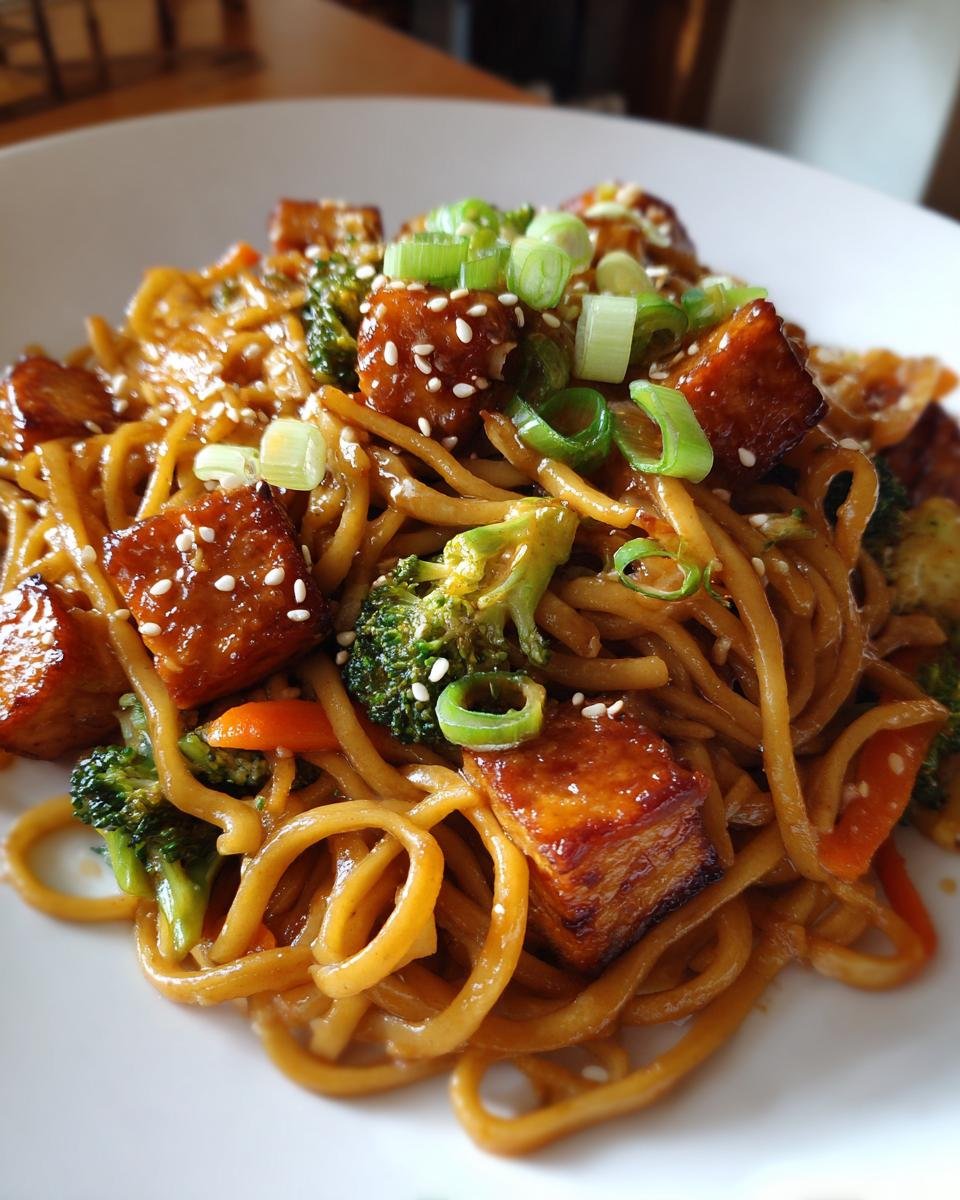
Variations for Your Plant Based Sesame Chicken Noodles
I love that this recipe for Plant Based Sesame Chicken Noodles is so flexible. Seriously, once you master that sauce ratio, you can pretty much throw anything in the wok! Cooking should be fun and adaptable, not rigid. My pantry always has a few extras floating around, and depending on what I’m craving, I’ll switch things up entirely. Don’t feel like you have to stick to broccoli and carrots every time—mix it up and keep things interesting!
Vegetable Swaps and Additions
The main thing to remember when swapping veggies is timing. If you add hard vegetables like cauliflower, you need to give them a head start before the softer stuff goes in. But for things that stir-fry quickly, you can toss them in right alongside the carrots and broccoli.
- Sliced red or yellow bell peppers are amazing here; they add such a nice sweetness when they start to caramelize a bit.
- Snap peas or snow peas are fantastic for adding that ‘pop’ of freshness and crunch right at the end. Just toss them in for the last minute of cooking!
- Mushrooms, like shiitake or cremini, absorb that sesame sauce like sponges, giving you little bursts of umami flavor. If you use them, make sure you cook them down slightly before adding the sauce so they release their water.
Boosting the Flavor Profile
If you feel like the sauce is missing that final, bright note, or if you just want to push it into a different direction, I have a couple of quick additions that are game-changers. These little tweaks make you feel like a culinary genius, even though they take literally zero extra effort!
- A squeeze of fresh lime juice right before tossing in the noodles wakes everything up! It adds a sharp acidity that cuts through the richness of the sesame oil beautifully.
- For a nuttier profile that goes beyond the sesame oil, try swapping out half the maple syrup for coconut sugar—it has a slightly toasted, deeper flavor.
- If you like things savory and earthy, a teaspoon of smoked paprika whisked into your sauce slurry adds a totally unexpected, warm depth that pairs surprisingly well with the ginger and garlic. Trust me on the paprika!
Serving Suggestions for Plant Based Sesame Chicken Noodles
Once you have those gorgeous, saucy Plant Based Sesame Chicken Noodles plated up, you might be wondering what else to serve alongside them. Honestly, they are a meal all on their own, but sometimes you just need a little something extra to round out the plate. I like serving mine with something light and fresh to contrast the sticky richness of the sauce. It keeps the whole meal from feeling too heavy!
For a truly comforting experience, especially if the weather is a bit gloomy, I love pairing these with a small bowl of homemade soup—a simple, clear broth really shines next to the robust sesame flavor. If you’re feeling ambitious after whipping up the noodles, check out my recipe for delicious homemade wonton soup; it makes the entire meal feel like a proper feast!
If you’re keeping it fast and simple, though, here are my go-to additions:
- Chilled, thinly sliced cucumbers tossed lightly with rice vinegar and a pinch of salt. They add the BEST cool crunch against the warm noodles.
- A side of quick pickled red onions. Their bright, sharp acidity cuts right through that maple syrup sweetness, making every bite taste new again.
- Simple steamed edamame sprinkled with flaky sea salt. It’s great for adding a little green pop and extra protein while you eat.
- If you’re feeling extra, a really light, crisp Asian slaw dressed with just lemon juice and a tiny bit of oil is wonderful on the side. Keep the dressing super light so it doesn’t compete with the main sauce!
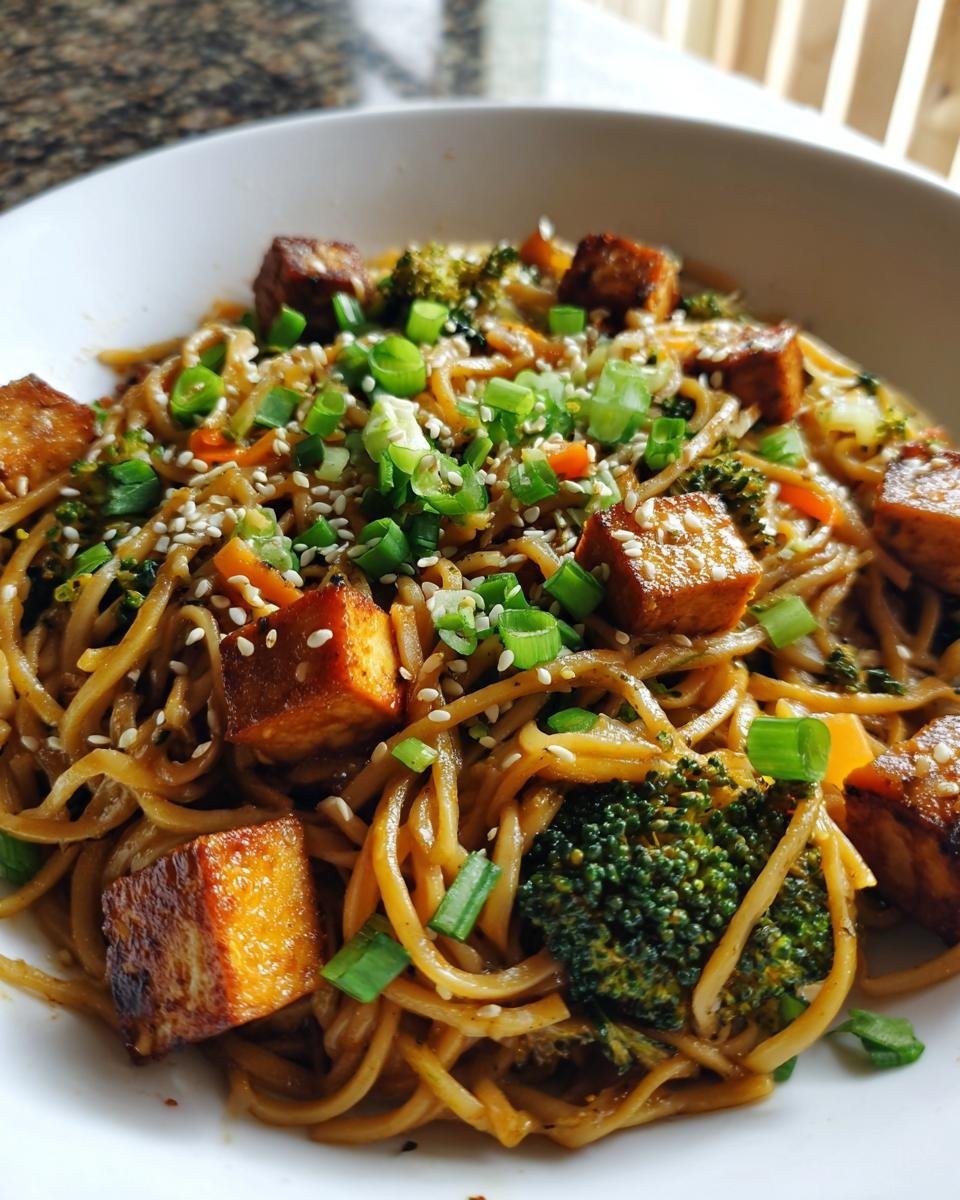
Storage and Reheating Instructions for Leftover Plant Based Sesame Chicken Noodles
I always hope there are leftovers because, strangely enough, these Plant Based Sesame Chicken Noodles are often even better the next day once those noodles have fully soaked up all that amazing sauce overnight! But we absolutely have to handle the leftovers right, or you end up with sad, gummy noodles, and nobody wants that tragedy.
The main enemy here is moisture, especially because we mixed the sauce and noodles together before serving. If you know you’ll have leftovers, you totally have two options, and I prefer the first one when I plan ahead. This is a key tip for preventing sogginess down the road!
Storing for Maximum Freshness
If you’re prepping ahead or packing lunches, try separating the components before you store them. Keep the crispy tofu (those are the heroes of the dish, after all!) in a separate small container from the noodles and the extra veggies. Once everything is totally cooled down, put the noodles and veggies into an airtight container.
You can keep these leftovers safely in the fridge for about three to four days. If the noodles look a little bit stiff or separated once they come out of the fridge, don’t panic! That’s just the starch settling in. Make sure the containers are sealed tightly so they don’t pick up any weird fridge smells, okay?
Reheating Without Soggy Noodles
Forget blasting this in the microwave for three minutes straight; that just turns everything rubbery and damp. The best way to bring these Plant Based Sesame Chicken Noodles back to life is by essentially re-stir-frying them very gently.
Take your noodles and veggies out of the fridge. Heat up a clean skillet over medium heat—not high, medium is perfect. Add just a tiny drizzle of sesame oil; you want to wake the sauce up, not cook it into oblivion. Toss the noodles and vegetables in the pan for just a couple of minutes until they are warmed through and the sauce loosens up again. This quick toss restores that great texture we worked so hard to achieve!
If you separated your tofu, toss that in for the last 30 seconds just to warm it up—you don’t need to re-crisp it, just get it hot. If you’re in a real rush and have to use the microwave, use short 30-second bursts and stir vigorously in between. Stopping frequently prevents that steam buildup that leads to mushy noodles!
Frequently Asked Questions About Plant Based Sesame Chicken Noodles
I know you might have a few lingering questions, because perfecting a plant-based version of a classic always brings up new ideas and concerns! That’s totally fine. It’s why I love tinkering until everything is perfect. Don’t worry if you don’t have every single ingredient on hand. We can usually pivot! Thinking about alternatives reminds me of how I approach other adaptable recipes, like my simple easy dump cakes; sometimes the substitution is what makes it special.
Can I substitute the tofu in this Plant Based Sesame Chicken Noodles recipe?
Absolutely! Tofu works as a fantastic meat substitute because it crisps up so nicely when coated in cornstarch, but if you aren’t a fan, you have options! Seitan is a wonderful, meatier alternative that takes on sauce incredibly well, though it generally won’t get quite as ‘crispy’ as the marinated tofu does, so maybe give that a quick pan-fry first.
If you want to keep it soy-free or just want a different texture, chickpeas are great too. You’ll want to roast or pan-fry the chickpeas separately until they are golden before adding them in with the sauce at the end. They won’t have the same chew as chicken or tofu, but they bring a great earthy flavor and firmness.
How can I make this recipe gluten-free?
This is one of the easiest swaps, honestly, and it doesn’t compromise the flavor of our amazing Plant Based Sesame Chicken Noodles at all. The main ingredients to monitor are the soy sauce and the noodles themselves.
For the soy sauce: Forget regular soy sauce entirely and use tamari! Tamari is naturally brewed without wheat and has a deeper, richer flavor profile that works perfectly with this nutty sauce. Make sure you are using tamari consistently for both steps where soy sauce is called for.
For the noodles: Just check the packaging! Most standard ramen noodles contain wheat. You can easily find gluten-free ramen alternatives, or simply swap in rice noodles, which fry up beautifully and readily absorb all that rich sesame sauce.
Estimated Nutritional Information
Now, before you rush off to make this incredible Plant Based Sesame Chicken Noodles, I always like to give a little peek at what’s inside! Since we’re dealing with a plant-based stir-fry loaded with healthy fats from the sesame oil and lots of fiber from the veggies and noodles, it’s a pretty balanced meal. Keep in mind that these numbers are just estimates, okay? They can change wildly depending on if you use thicker peanut noodles or soak up extra sauce!
I calculated these based on the recipe yielding four generous servings, so one plate should look something like this:
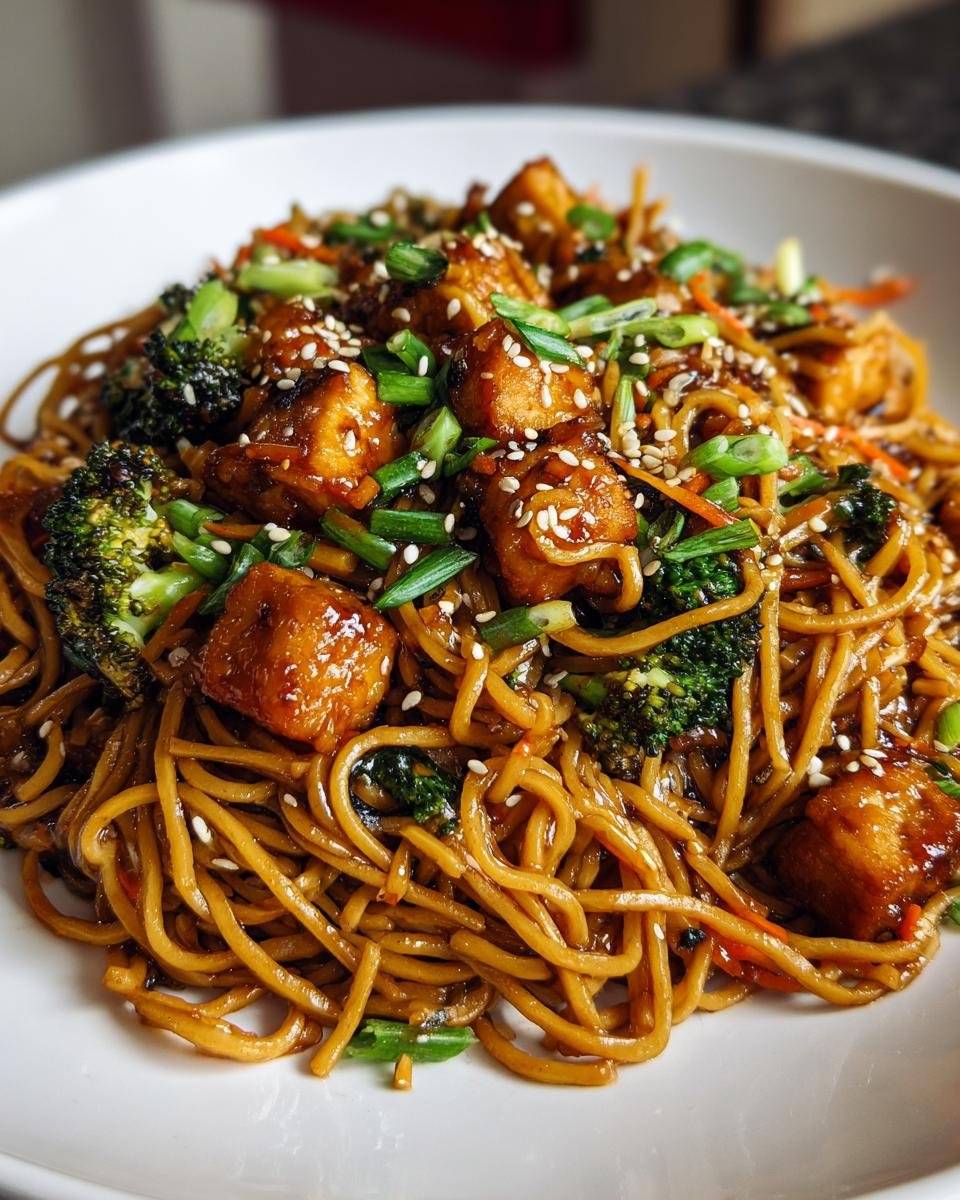
- Calories: Around 450 per serving. That’s fantastic for a dish this satisfying!
- Protein: About 25 grams right here, mostly from that tofu we crisped up!
- Fat: Roughly 18 grams total. Most of that good, healthy fat is coming from that delicious toasted sesame oil.
- Carbohydrates: You’re looking at about 55 grams, giving you plenty of energy.
It’s a low-cholesterol, high-fiber option that feels decadent but keeps you energized for the rest of the evening. Honestly, I never stress too much about nailing the exact numbers when cooking at home, but it’s comforting to know we’re eating something satisfying *and* fueling!
Print
Plant Based Sesame Chicken Noodles
- Total Time: 35 min
- Yield: 4 servings 1x
- Diet: Vegan
Description
A quick recipe for savory plant-based noodles with a sesame sauce.
Ingredients
- 12 oz noodles (ramen or spaghetti)
- 1 block (14 oz) extra-firm tofu, pressed and cubed
- 2 tablespoons soy sauce (or tamari)
- 1 tablespoon cornstarch
- 2 tablespoons sesame oil, divided
- 1 cup broccoli florets
- 1/2 cup shredded carrots
- 1/4 cup soy sauce (or tamari)
- 3 tablespoons rice vinegar
- 2 tablespoons maple syrup
- 1 tablespoon grated fresh ginger
- 2 cloves garlic, minced
- 1 teaspoon sriracha (optional)
- 2 tablespoons water
- 1 teaspoon cornstarch
- 1 tablespoon toasted sesame seeds for garnish
- 2 green onions, sliced for garnish
Instructions
- Cook noodles according to package directions. Drain and set aside.
- In a bowl, toss the cubed tofu with 2 tablespoons soy sauce and 1 tablespoon cornstarch until coated.
- Heat 1 tablespoon of sesame oil in a large skillet or wok over medium-high heat. Add the tofu and cook until golden brown and crispy on all sides, about 8-10 minutes. Remove tofu from the skillet and set aside.
- Add the remaining 1 tablespoon of sesame oil to the skillet. Add broccoli and carrots. Stir-fry for 3-4 minutes until tender-crisp.
- In a small bowl, whisk together 1/4 cup soy sauce, rice vinegar, maple syrup, ginger, garlic, and sriracha (if using).
- Pour the sauce mixture into the skillet with the vegetables. Bring to a simmer.
- In a separate small bowl, mix 2 tablespoons of water with 1 teaspoon of cornstarch to create a slurry. Pour the slurry into the simmering sauce and stir until the sauce thickens slightly.
- Return the cooked tofu to the skillet. Add the cooked noodles. Toss everything together until the noodles and tofu are well coated with the sauce.
- Serve immediately, garnished with toasted sesame seeds and sliced green onions.
Notes
- Pressing the tofu removes excess water, helping it crisp up better during cooking.
- Adjust the amount of sriracha to control the spice level.
- Use gluten-free tamari and gluten-free noodles for a gluten-free version.
- Prep Time: 15 min
- Cook Time: 20 min
- Category: Main Course
- Method: Stir-Frying
- Cuisine: Asian Inspired
Nutrition
- Serving Size: 1 serving
- Calories: 450
- Sugar: 10
- Sodium: 850
- Fat: 18
- Saturated Fat: 2.5
- Unsaturated Fat: 15.5
- Trans Fat: 0
- Carbohydrates: 55
- Fiber: 6
- Protein: 25
- Cholesterol: 0
Keywords: plant based, vegan, sesame chicken, noodles, tofu, stir fry, asian recipe